How to train for a backpacking trip
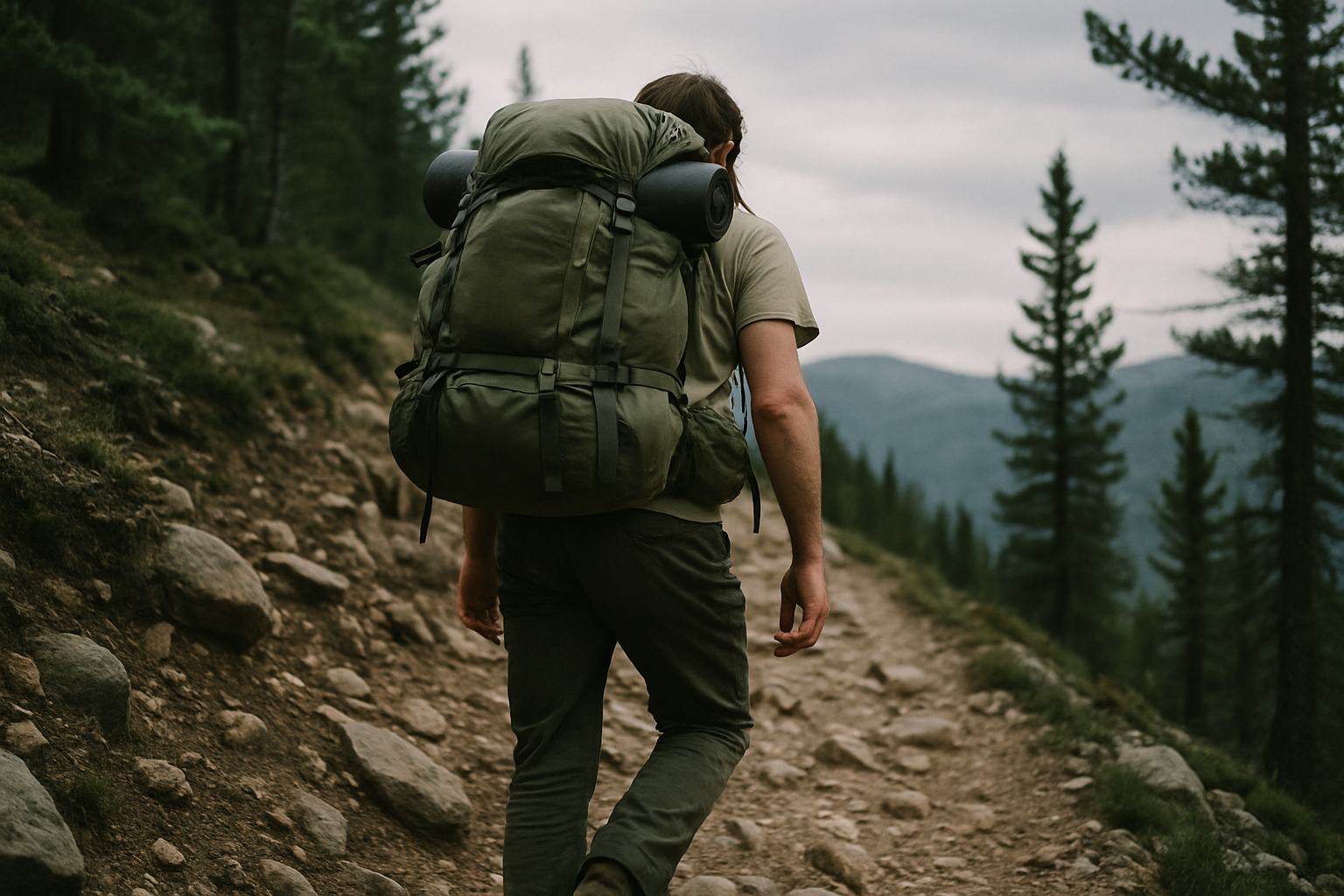
Backpacking is hard in a specific way. You walk for hours, you climb, you descend, and you do all of it with a weighted pack pulling on your shoulders and hips. Training that ignores any one of those things leaves a gap that shows up on day two of the trip, usually as wrecked quads or a back that has had enough. This guide walks through the pieces that actually move the needle, in the order they matter.
Build a weekly long hike
The single most useful session is one long hike a week that you slowly stretch out. It teaches your feet, your hips, and your head to keep going long after the novelty wears off, which is exactly the skill a multi-day trip demands. Pick a day, find terrain that resembles your route, and add distance gradually as the weeks go by.
Do not chase a personal best every weekend. The long hike works because it is repeatable, so most weeks should leave you tired but not broken. If your trip involves several big days back to back, train that pattern occasionally with a long hike on Saturday and a shorter loaded walk on Sunday, so your legs learn to start a hard day already a little fatigued.
Train with the pack you will carry
Carrying a loaded pack is not the same activity as walking. The weight shifts your center of gravity, shortens your stride, and pushes far more load through your knees and ankles, especially downhill. A month of unloaded walks will not prepare your body for that, so the pack has to be part of training, not a surprise on the trailhead.
Start light, around 10 to 15 percent of your body weight, and build toward a pack a little heavier than the one you plan to carry. Arriving overprepared means the real pack feels manageable. Load it with water jugs or sandbags you can dump if a session goes badly, and keep the weight close to your back rather than sagging at the bottom.
The American Council on Exercise notes that descending stairs or hills relies heavily on eccentric muscle contractions, where the muscle lengthens under load, and that this kind of work produces the most delayed-onset muscle soreness. That is why downhill hiking leaves your quads sore for days if you have not trained the descent.
Source: American Council on Exercise, Exercise Science, eccentric muscle action.Do not skip the downhill
Most people train the climb and forget the descent, then wonder why their knees and quads scream on the way back down. Going downhill loads the quadriceps eccentrically, lengthening the muscle while it works to control each step, and that contraction causes more microscopic damage than the climb itself. The good news is that the body adapts fast once it is exposed.
Seek out descents in training, take them at a controlled pace, and use trekking poles to share the load. Even a few weeks of deliberate downhill walking blunts the worst of the soreness, which is the difference between enjoying day two and limping through it.
Use stairs and elevation when you cannot reach the mountains
If your route climbs but your home turf is flat, you still have options. A loaded pack on a stair climber, a tall parking garage, or a steep local hill repeated several times all build the specific strength that climbing demands. REI's expert advice on conditioning for a hike recommends exactly this kind of stair and hill work, plus step-ups, to prepare your legs for sustained elevation gain. Match the climbing in your training to the total elevation on your trip, not just the distance.
Respect the ten percent guideline, then add a deload
As you add distance, climbing, and pack weight, do it gradually. A widely taught rule of thumb is to increase your weekly training load by no more than about ten percent at a time. It is worth knowing that the ten percent rule is a convention rather than a proven law, and research has questioned how strictly it should be applied, so the smarter move is to treat any new ache or lasting fatigue as your real ceiling.
Every third or fourth week, back off. A deload week, where you cut volume by a third or so, lets the small damage from hard training repair and turn into actual fitness. Pushing hard week after week with no recovery is the fastest route to an overuse injury that ends your training entirely.
Taper before you go
The week before your trip is for arriving fresh, not for cramming. Cut your volume back, keep a short loaded walk or two to stay sharp, and let your legs absorb all the work you have banked. A backpacking taper is shorter than a marathon taper, but the principle is the same: the fitness is already in the bank, and rest is what lets you spend it.
If your trip climbs high, remember that altitude is its own challenge. No amount of training prevents altitude sickness, so on high routes plan to ascend gradually and give your body time to adjust above roughly 2,500 m or 8,000 ft. Train for the miles and the climbing, and treat acclimatization as a separate plan built on patience.
Put it into a week-by-week plan
All of this is easier to follow when it is laid out as a schedule. Our free hiking and backpacking training plan generator takes your trip date, distance, elevation gain, and pack weight and builds a week-by-week printable plan with a sensible build, a deload, and a real taper, so you are not guessing how fast to ramp. It is free, needs no signup, and you can print the PDF and stick it on the fridge.
If you want the bigger picture of how those phases fit together, read what a good hiking training plan looks like, and for the reasoning behind those final easy days, see our guide to what a taper is and why it matters.
Sources
- REI Expert Advice, Training for a Hike, conditioning, stair and hill work, and loaded-pack practice (rei.com).
- American Council on Exercise, eccentric muscle action and delayed-onset muscle soreness (acefitness.org).
- Centers for Disease Control and Prevention, Travel to High Altitudes, gradual ascent and acclimatization (cdc.gov).
Frequently asked questions
How long before a backpacking trip should I start training?
Give yourself eight to twelve weeks for a multi-day trip with real elevation. That is enough time to build a weekly long hike, add loaded-pack practice, fit in a deload week, and finish with a short taper. If you are already active you can manage with six weeks, but more time means a lower weekly jump and a smaller injury risk.
Should I train with a loaded pack?
Yes. Carrying weight changes your balance, your stride, and the load on your knees and hips, so a few unloaded walks will not prepare you. Start light, around 10 to 15 percent of body weight, and build up to a pack that is a little heavier than the one you will actually carry, so the real thing feels easier.
Why does downhill hiking hurt so much?
Going downhill loads your quadriceps eccentrically, meaning the muscle lengthens under tension to control each step. That kind of contraction causes the most muscle damage and the deepest soreness. The fix is to practice descents in training so the muscle adapts before your trip, not on it.
How fast can I add distance or pack weight each week?
A common guideline is to add no more than about ten percent to your weekly load at a time, then hold or drop back if anything aches. The ten percent figure is a starting point rather than a law, so treat any new pain or lasting fatigue as the real signal to ease off.
Do I need to taper before a backpacking trip?
A short taper helps. In the final week or so, cut your training volume while keeping a couple of shorter hikes with a light pack, so you arrive rested instead of run down. You do not need the full three-week taper a marathoner uses, but a few easier days before a hard trip pays off.
What about altitude?
Fitness does not prevent altitude sickness. If your trip climbs above roughly 2,500 m or 8,000 ft, plan to ascend gradually, sleep low when you can, and build in time to acclimatize. Train hard for the miles and the climbing, but treat altitude as a separate problem that patience, not fitness, solves.