What to bring on a hike: the 10 essentials and what they weigh
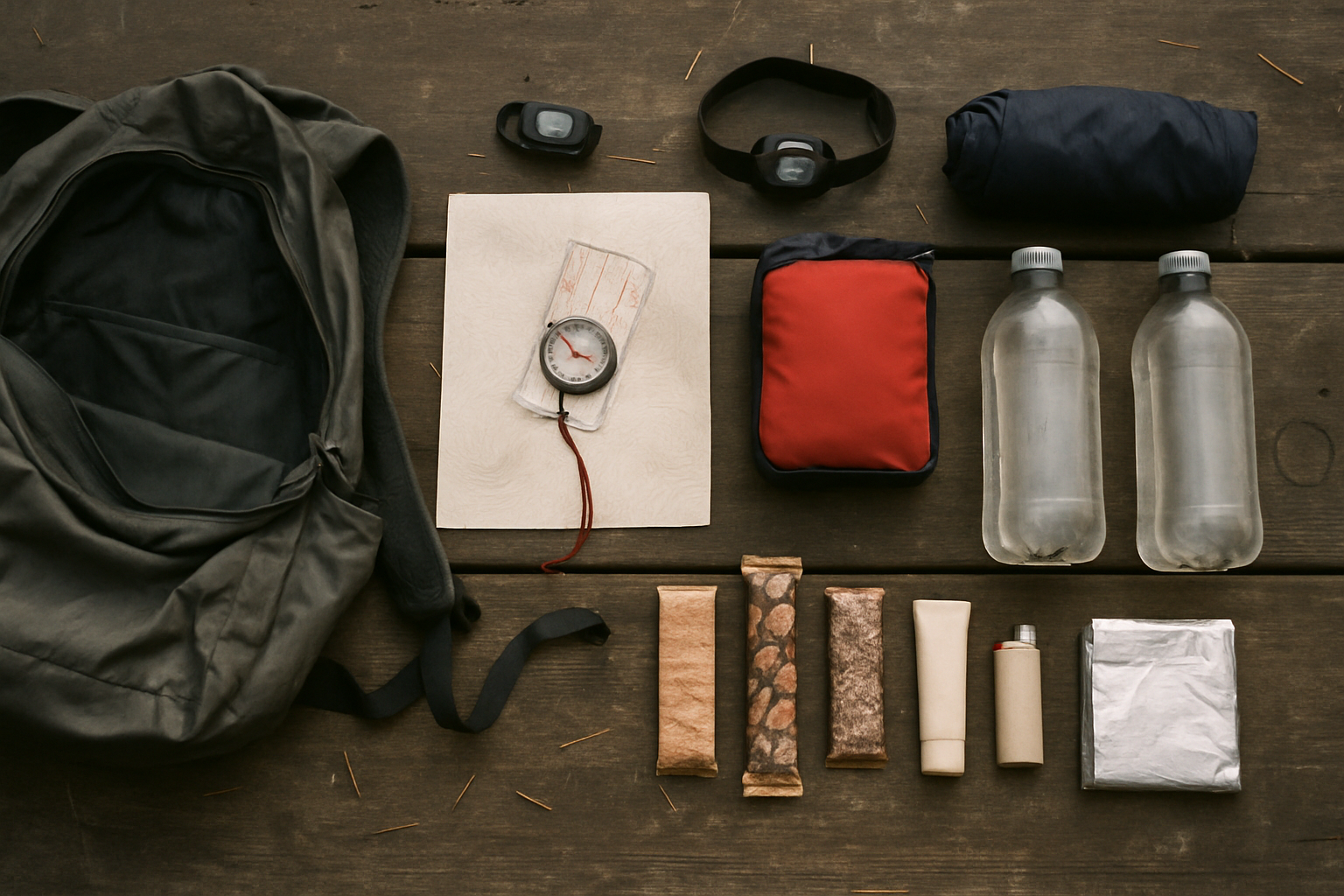
Ten things, and the list is older than anything in your gear closet. The Mountaineers, a Seattle climbing club, put it in print in the third edition of Mountaineering: The Freedom of the Hills in 1974, and the book is now in its tenth edition, published in November 2024. What changed since then is the framing. The modern version treats each entry as a system you size to the day, so a two-hour walk on a signed trail and a ten-mile day in the mountains carry different versions of the same ten. Here is what goes in a day pack, what each piece weighs on a kitchen scale, and how to keep the loaded total under the weight your legs have actually trained for.
What should you bring on a day hike?
The ten essentials, plus the water and food for the hours you plan to be out. That means navigation, a headlamp, sun protection, a first aid kit, a knife, a way to start a fire, an emergency shelter, extra food, extra water and extra clothes. On a short signed trail the extras can be small. They still come.
Easy days are the ones that go wrong, which is the whole argument for carrying a headlamp on a walk you expect to finish by four in the afternoon. Heggie and Heggie's review of National Park Service search and rescue records found that day hiking produced more rescue operations than any other activity, ahead of motorized boating and swimming. The factors that came up most often were errors in judgment, fatigue and physical condition, and insufficient equipment, clothing or experience. Two of those three are a packing problem.
Between 1992 and 2007 the National Park Service logged 65,439 search and rescue incidents involving 78,488 people, an average of 11.2 a day, at about 895 dollars an operation. Hiking accounted for 48 percent of them, more than twice the share of boating. A headlamp, a shell, a first aid kit and an emergency blanket weigh 23 ounces between them. That is the trade.
Source: Heggie T.W., Amundson M.E., Dead Men Walking: Search and Rescue in US National Parks, Wilderness and Environmental Medicine, 2009.The 10 essentials, and what each one weighs
- Navigation. A paper map and a compass, plus your route downloaded for offline use before you lose signal. Paper does not run flat in the cold.
- Headlamp. A Black Diamond Spot 400 weighs 86 g, about 3 ounces, with its three AAA cells, and puts out 400 lumens on high. Using your phone as a torch burns the battery you want for the map.
- Sun protection. Sunscreen, sunglasses and a brimmed hat. Snow and altitude both raise the dose you take, so spring hikes on snow burn people who never think about it.
- First aid. A day kit like the Adventure Medical Kits Day Tripper Lite is 3.4 ounces for 59 pieces. Add more blister tape than it comes with, because blisters are the injury you will actually treat.
- Knife or multi-tool. Small, and it lives in the pack rather than in a drawer at home.
- Fire. A lighter and a bit of tinder in a zip bag, kept dry. This is a warmth item, not a campfire item.
- Emergency shelter. A SOL Heatsheets blanket is 2.5 ounces, opens to 56 by 84 inches, reflects up to 90 percent of radiated body heat and has a high-visibility orange side that makes you easier to spot.
- Extra food. One more bar than the day needs. Calorie-dense and no cooking required.
- Extra water. A liter weighs 2.2 pounds, so this is the item that sets your pack weight. More on how much below.
- Extra clothes. A rain shell, a warm hat and gloves, sized for the coldest you could get if you stopped moving.
Weigh the big four and the number comes out smaller than people expect. A men's Patagonia Torrentshell 3L is 14.1 ounces, the headlamp 3, the first aid kit 3.4 and the emergency blanket 2.5. That is 23 ounces, a pound and a half, for the four items that cover cold, dark, rain and blood. The rest of the list is small stuff that disappears into a lid pocket.
How much should a day hiking pack weigh?
Under 10 percent of your body weight for a day hike, and under 20 percent once you add overnight gear. That is REI's pack-weight rule of thumb, and it works better as a ceiling than a target. A 160-pound hiker gets 16 pounds. Two liters of water takes 4.4 of them before anything else goes in.
So water is where the weight is. Those two liters outweigh the shell, the headlamp, the first aid kit and the blanket combined by about three to one. If your route crosses a stream you trust and you carry a filter, start with one liter and refill, and you have bought back more than two pounds. Shaving grams off a knife does nothing by comparison.
The other half of the answer is what the weight sits on. A 16-pound pack on shoulders that have carried nothing heavier than a laptop for six months feels different from the same 16 pounds on someone who has been walking with a loaded pack once a week. The number on the scale is only half the problem.
How much water should you bring on a hike?
Half a liter an hour in moderate temperatures and terrain, which is the American Hiking Society's planning figure. Four hours out is two liters. Heat rewrites that fast, and the Grand Canyon rangers are blunt about it: hikers there can lose one to two quarts an hour, and the park tells people to stay off the inner canyon trails between 10 a.m. and 4 p.m. in summer.
Food follows the same logic. The Grand Canyon guidance is to eat about twice what you normally would, and inner canyon rangers push salty snacks, pretzels, chips and cheese crackers, over sweet ones. You sweat out salt as well as water, and replacing only the water is its own problem on a long hot day. Pack the salty bag and the sugary bar, and eat before you feel like you need to.
What should you wear on a hike?
Wool or synthetic, and a shell you put on before you get cold. The National Park Service warns that hypothermia can set in anywhere between 30 and 60 F once wind or rain is involved, and tells visitors to avoid cotton, which is useless as insulation once it is wet. A cotton t-shirt is fine in the parking lot and a liability on a windy ridge at 45 F in the rain.
Layer so you can shed heat on the climb and add it at the top. Most people overdress at the trailhead, sweat through the first mile, then get cold the moment they stop for lunch. Start slightly cool, put the warm layer on during the break rather than after you start shivering, and keep the hat and gloves where you can reach them without unpacking the bag.
What to add for a longer or higher day
Distance and elevation change the list more than the calendar does. Longer days need more food and a headlamp you have checked. Snow and ice need traction: microspikes on a shoulder-season trail are the difference between walking down and sliding down. Where there is no cell coverage, a satellite messenger or a personal locator beacon is the only way to call for help that does not depend on bars.
Elevation gain also changes the training, not the gear. A 12-mile day with 3,000 feet of climbing and a full pack is a different event from 12 flat miles, and your quads find that out on the descent rather than the climb.
Train with the weight you plan to carry
A loaded pack shortens your stride, shifts your balance and pushes far more load through your knees and ankles going downhill. Practicing with it is the cheapest injury prevention there is. Our free hiking training plan generator takes your hike date, distance, elevation gain and pack weight, then prints a week-by-week plan that builds all three and tapers before you go. No signup, no email.
For the sessions themselves, our guide to training for a backpacking trip covers the weekly long hike, loaded-pack practice and downhill work. If you want the shape of the whole block first, read what a good hiking training plan looks like, and why the taper matters for the last two weeks.
Sources
- The Mountaineers, Mountaineering: The Freedom of the Hills; the ten essentials first appeared in the third edition in 1974, and the tenth edition was published in November 2024 (mountaineers.org).
- National Park Service, Ten Essentials: navigation, sun protection, extra clothing, illumination, first aid, fire, repair kit and tools, nutrition, hydration, emergency shelter (nps.gov).
- American Hiking Society, The 10 Essentials of Hiking; half a liter of water per hour in moderate temperatures and terrain (americanhiking.org).
- National Park Service, Grand Canyon hiking guidance; hikers can lose one to two quarts of water an hour, avoid the trails from 10 a.m. to 4 p.m. in summer, eat twice as much as usual and favor salty snacks (nps.gov).
- National Park Service, Kenai Fjords, Hypothermia; risk between 30 and 60 F with wind or rain, wear wool or synthetic and avoid cotton (nps.gov).
- Heggie T.W., Amundson M.E., Dead Men Walking: Search and Rescue in US National Parks, Wilderness and Environmental Medicine, 2009; 65,439 SAR incidents and 78,488 people from 1992 to 2007, 11.2 incidents a day, 895 dollars per operation, hiking 48 percent and boating 21 percent (wemjournal.org).
- Heggie T.W., Heggie T.M., Search and Rescue Trends Associated With Recreational Travel in US National Parks, Wilderness and Environmental Medicine, 2009; day hiking produced the most SAR operations, with errors in judgment, fatigue and physical condition, and insufficient equipment, clothing or experience as leading contributing factors (pubmed.ncbi.nlm.nih.gov).
- REI Expert Advice, How Much Should Your Pack Weigh; about 10 percent of body weight for a day pack and 20 percent for a backpacking load (rei.com).
- Manufacturer specifications: Black Diamond Spot 400, 86 g with three AAA batteries, 400 lumens, IPX8 (blackdiamondequipment.com); SOL Heatsheets Emergency Blanket, 2.5 oz, 56 by 84 in, reflects up to 90 percent of radiated body heat (adventuremedicalkits.com); Adventure Medical Kits Mountain Series Day Tripper Lite, 3.4 oz, 59 pieces (adventuremedicalkits.com); Patagonia Torrentshell 3L mens jacket, 14.1 oz (patagonia.com).
Frequently asked questions
What are the 10 essentials for hiking?
Navigation, a headlamp, sun protection, first aid, a knife or multi-tool, fire, an emergency shelter, extra food, extra water and extra clothes. The Mountaineers published the original list in 1974 and the National Park Service uses the same ten. Modern versions treat each one as a system you scale to the trip.
How much water should I bring on a day hike?
Half a liter per hour in moderate temperatures and terrain, so about two liters for a four-hour hike. In heat, plan for more: Grand Canyon rangers warn that hikers can lose one to two quarts an hour. If you can refill from a stream with a filter, carry one liter and save 2.2 pounds.
How heavy should a day hiking pack be?
Under about 10 percent of your body weight, so 16 pounds for a 160-pound hiker. Backpacking packs run to 20 percent. Water is the biggest single item at 2.2 pounds a liter, so the fastest way to a lighter pack is a refill point, not lighter gear.
Do I need all ten on a short, popular trail?
Yes, in small form. A headlamp and an emergency blanket weigh five and a half ounces between them, and a rain shell adds about 14. Those three cover the two things that turn a short hike into a rescue: finishing after dark, and getting wet and cold. Day hiking produces more search and rescue call-outs in US national parks than any other activity.
What should I wear on a hike?
Wool or synthetic layers, never cotton, plus a rain shell you can reach quickly. The National Park Service notes hypothermia can start between 30 and 60 F when it is windy or wet, and that cotton stops insulating once it is wet. Start slightly cool and add the warm layer at rest stops.
Should I train with my loaded pack before a big hike?
Yes. Weight changes your stride and loads your knees on the descent, and a few unloaded walks will not prepare you for it. Walk with the pack once a week, start around 10 to 15 percent of body weight, and build to slightly more than you plan to carry.